Image

Explore practical insights on applying CONNECT findings to CGM use in adults with type 2 diabetes not using insulin.
CONNECT lead investigator Dr. Tamara K. Oser discusses findings from the study of CGM in adults with type 2 diabetes not using insulin. She also shares her perspective on applying the findings in primary care, engaging patients with CGM data, and the implications for access and coverage.
CGM has historically been more commonly used in insulin-treated populations, while its role in broader diabetes management continues to be evaluated across a range of clinical settings, including primary care. For adults with type 2 diabetes not using insulin, adoption has been influenced by an evolving evidence base and ongoing questions related to access and coverage.
As additional research becomes available, clinicians are increasingly looking to understand how emerging findings can be applied in routine practice and what they may mean for the future role of CGM in this population.
The CONNECT study provides an opportunity to explore these questions through the lens of clinical evidence and practical implementation. To better understand what the findings mean for primary care and adults with type 2 diabetes not using insulin, we spoke with CONNECT lead investigator Dr. Tamara K. Oser about the study’s significance, key takeaways, and broader implications for CGM access, coverage, and future care.

Many participants reported feeling more confident and in control of their diabetes management.
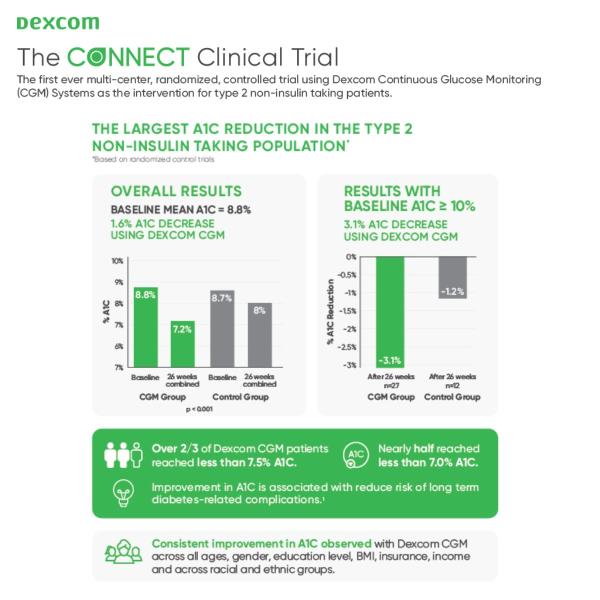
This relatively large RCT among people with type 2 diabetes not taking insulin showed a much larger decrease in A1C among CGM users than in the control group. Because of the randomized nature of the trial and the similar treatment of the CGM and control groups, we know we can attribute the differences to CGM use itself. What we found was a decrease in A1C of 0.9% more in those randomized to CGM than in controls. In subgroup analyses, these differences persisted regardless of baseline A1C level, baseline use of other diabetes medications, and a broad range of demographic factors, with the CGM group consistently demonstrating greater A1C reductions than non-CGM users.
We also found that the reduction in glucose levels was almost immediate, with a large reduction happening by the end of the first week of use. There was additional reduction over the next few weeks, and those new lower levels were sustained across the entire six-month observation period.
In addition to the A1C effects, CGM users experienced greater increases in time in the target glucose range, about five hours per day more than without CGM, as well as less time in high and very high glucose ranges and less time in low and very low glucose ranges.
Patients who participated also reported important benefits with CGM use. People in the CGM group reported greater satisfaction with their glucose monitoring method, reduced distress related to living with and managing diabetes, improvement in the cognitive and emotional effects of diabetes, and greater security and confidence around hypoglycemia.
CGM users reported feeling like they received real-time, actionable feedback to help them make meaningful choices. They also described reduced mental burden and greater confidence, agency, and hope in their diabetes management. In comparison, participants without CGM felt they often relied on guesswork and reported searching for ways to regain a sense of normalcy and feel more in control.

Evidence continues to expand around CGM use beyond insulin-treated diabetes.
Until this study, there was limited evidence around the potential benefits of CGM use in people with type 2 diabetes who were not using insulin. The CONNECT study was specifically designed to evaluate whether adding CGM to the management of non-insulin-treated type 2 diabetes would demonstrate benefit and, if so, how much.
This RCT involving 283 adults with type 2 diabetes not using insulin provides new rigorous data on CGM use and outcomes in this population.
Type 2 diabetes is mostly managed in primary care, and part of the eligibility criteria for this study was that the patient had to be managed in a primary care setting by a primary care provider. We designed the study this way to make the results more scalable to the real-world settings where people with type 2 diabetes not using insulin receive their care.
This was a randomized controlled trial, not a real-world study, though we went to great lengths to retain as much real-world circumstance as we could. As with any study, results in real-world practice may vary.
Standards of care, treatment recommendations, and insurance coverage policies depend on evidence supporting a treatment or intervention. CGM applicability and coverage have both grown over recent years as evidence has accumulated across a growing number of clinical scenarios.
This RCT evidence and the magnitude of the effect should support expanded use in non-insulin-treated type 2 diabetes. We now have clear evidence that the very large number of people with type 2 diabetes who do not use insulin also stand to gain from using CGM in their diabetes treatment.
On the strength of this evidence, I expect to see CGM use become a standard recommendation for non-insulin-treated type 2 diabetes, and insurance coverage policies likewise expand to include this large group of people.
It was really remarkable how much and how quickly people saw their glucose levels change with CGM use in this study. By the time they came for their first study visit after CGM initiation, they had already made significant changes.
So, when seeing someone clinically after they’ve started CGM, I recommend asking them what they have learned or what changes they have made, rather than jumping straight to the data. Engaging them in the discussion and valuing their perspective sets a tone right away that can be used to transition to data review later in the conversation.
It can also be helpful to tailor the data review to reinforce what they’ve told you and use the data to suggest other possible changes they might consider. I also find it useful to discuss just one or two changes at a time when reviewing CGM data, rather than trying to tackle everything at once, which can sometimes be overwhelming.
CONNECT clearly demonstrates that CGM is beneficial for people with type 2 diabetes who are not taking insulin. There was a profound effect on A1C, which, quite frankly, was an even more pronounced reduction than I expected to see.
But beyond that, there were also significant improvements in time in the target glucose range, reductions in hyperglycemia and hypoglycemia at every level, and people reported feeling better, too.
It is very gratifying that the real people who participated in this large trial said they experienced greater confidence, reduced distress, reduced mental and emotional burden, and greater agency. So, not only did the numbers improve, but so did how people actually feel.
To be able to show this in a carefully designed and conducted randomized controlled trial provides evidence that CGM is what made the difference in A1C and other outcomes. This trial provided clear evidence that CGM doesn’t only help people with type 1 diabetes or insulin-treated type 2 diabetes, but that it should be available for people with non-insulin-treated type 2 diabetes because it helps them in numerous ways, too.
Oser TK, Martens T, Ruedy KJ, et al; CONNECT Study Group. Continuous glucose monitoring in non-insulin-treated type 2 diabetes. N Engl J Med. Published online October 14, 2026. doi:10.1056/NEJMoa2608571.