Image
Recorded live at ADA 2026, this episode explores the CONNECT Trial and its implications for clinical practice.
This podcast is not approved for CME credit. Every diabetes treatment plan is different, individual results may vary – nothing you hear on this podcast should be considered medical advice. All claims are supported by clinical evidence referenced in the show notes. For clinical study results, please refer to the Dexcom G7 User Guide. For product-related questions, please refer to the instructions for use. For complete safety information, go to dexcom.com/safety-information.
Recorded at ADA 2026, this episode reviews findings from the CONNECT Trial, a randomized controlled study of real-time continuous glucose monitoring (CGM) in adults with type 2 diabetes not using insulin. Healthcare providers will hear how CGM was used in primary care and the practical insights it may provide for patient engagement and diabetes management.
Can continuous glucose monitoring (CGM) improve outcomes for type 2 diabetes patients not on insulin? In this episode of the GlucoseTech Podcast, host Cher Pastore, is joined by Keri Leone, from Dexcom Medical Affairs to unpack the CONNECT Trial presented at ADA 2026.
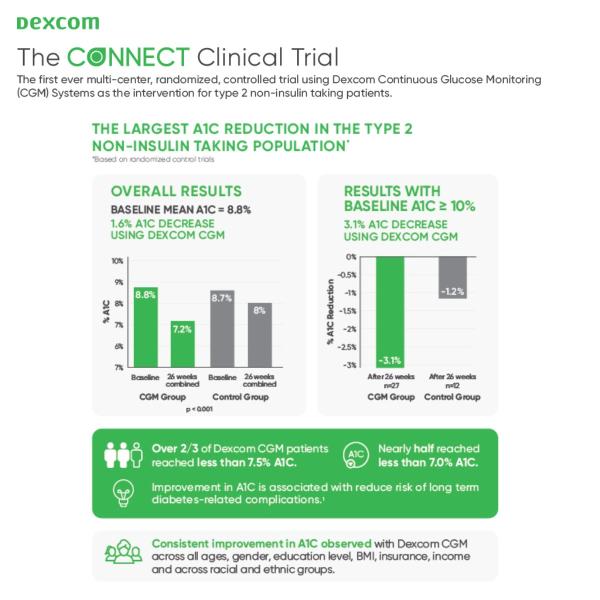
This landmark randomized controlled trial showed Dexcom G7 CGM delivered a 1.6% A1C reduction and doubled time in range in primary care settings, with 97% voluntary wear time.1 Discover how this evidence is set to reshape diabetes management and expand CGM access for healthcare providers and patients across diverse populations.
Hey, everyone. Before we get into today's episode, we've got a quick update to share. You might have noticed things look a little different. That's because "Real Time, Real Talk" is now called "GlucoseTech." While the name has changed, everything you know and enjoy about the podcast is staying the same. You'll still get the same conversations, the same expert insights, and the same technology shaping diabetes care. This new name simply streamlines branding at Dexcom. So if you see "GlucoseTech" in your feed, don't worry, you're in the right place. Thanks, as always, for listening.
Now let's get into the episode of "GlucoseTech." Welcome to "GlucoseTech." This is a podcast dedicated to US-based healthcare providers treating patients with diabetes. When you speak to Dr. Roy Beck and our primary investigator, Tamara Oser, they were all shocked. In the treatment group, we saw a 1.6% reduction in hemoglobin A1c. Almost every single person when we did the extension phase, so moving from 26 weeks to 52 weeks, said, "Yes, I want, don't take the CGM away from me." Even toward the end of the study, when there wasn't continuous follow-up from the clinics, these subjects or patients continued to wear it 97% of the time of the 26-week trial.
Welcome back to another episode of "GlucoseTech." We are live today from ADA, ADA 2026, and we are joined by a very special guest, Keri Leone. Keri, welcome. Sure. It's such an honor to be here on your podcast three years running. Oh my goodness. I know. It's my inaugural time to be here. I'm so excited. So nice to work with you. Yes. So Keri, before we get into our episode, tell our listeners kind of about you and yourself, and even before you joined Dexcom. You were in practice as a dietitian. Yes. So, many decades in the space of diabetes. We won't say how many, but started clinical practice at Kaiser Permanente as a diabetes case manager, and also in their hypoglycemia clinic.
And after several years of clinical practice, went to Bristol Myers Squibb to launch their Glucophage XR way back when. And then Animas Corporation, and had the wonderful opportunity to bring that technology forward. And then in 2006, I made the best decision in my professional career, and Dexcom didn't even have a product, but I knew some great people at Dexcom, and I jumped over from Animas over to Dexcom in 2006. I've been here for 20 years. I started off building the commercial clinical aspect of Dexcom, early 2008, and then after that, continued to work with you and our other great colleagues at Dexcom, really bringing education as a forefront for patients across all the continuum of CGM use.
And then brought over to medical affairs, and that was in 2019, and had the greatest opportunity to now expand globally. And I lead all of Asia Pacific, North America, and work with EMEA and our Latin America colleagues to drive CGM as standard of care across the globe. Oh my gosh. It's been a great honor. Keri, that is a really illustrious career, and you're not even halfway through, so that is so great. And I really think it's important for our listeners to know where you're coming from, right? That is a wealth of experience. So, I think that's amazing. So now that we've gone through that, I want us to try to tell our listeners, because I think you are familiar with the DIAMOND trial, right, since you've been at Dexcom for a while.
So I want you to tell our listeners about the CONNECT Trial, and why is it so important, who does it matter for, and let's just get right into the specifics of it. Okay. Love it. So one of the things that we drive at Dexcom is, of course, technology. But one of the other things as a clinician is we want to make sure we drive the opportunity for best-in-class care and show that innovation leads to clinical outcomes and is economically and value driven. So we started off actually at the JDRF trial back in 2008, where we were one of the external sponsors of that trial, which was a randomized controlled trial for type 1 diabetes using CGM. That then became standard of care.
Then we had the DIAMOND trial, which was type 2 intensive insulinmanaged patients, and showed the same thing. It was a Dexcom-sponsored trial, and we saw, again, clinical outcomes that were substantial for those using intensive insulin therapy with type 2 diabetes. Then we progressed to the MOBILE study, and the MOBILE study was, again, your type 2 patients, but using basal insulin, showed significant reduction in hemoglobin A1c, all the CGM metrics for just basal-only insulin patients. All of that has become standard of care now in the United States, has influenced ADA standards of care, ACE standards of care, and also now globally, where it's impacting the European Association for the Study of Diabetes and other in-country organizations that are driving their own standards of care.
So really, it's a nice balance of not only having technology, but knowing that we can prove those outcomes that are increasing access to patients. And so now most recent to your question is the CONNECT Trial, and so this will be our third Dexcom-sponsored study, randomized controlled trial, with the idea to not only show clinical outcomes, but have that be modeled to health economic outcomes and value. That CGM, although is not a technology that is cheap, there is a cost to it, as well as the pharma drugs that we want to add in combination. So, how do we bring this technology for everyone to have access, as well as being very focused on the value and the dollars of healthcare?
Healthcare dollars are not going up, they're going down, so they want more for less, and so we look at both of that. So what the CONNECT Trial did was our third randomized controlled trial looking at type 2 diabetes, not taking insulin. And this was really, I think, I would say, an edgy kind of study, right? Randomized controlled trials are not cheap. They're in the millions. And we needed to show the world that CGM is a cross-diabetes therapy. It's not just for insulin. Yes, we have made people's quality of life and their outcomes better when using insulin.
But CGM, especially Dexcom CGM, is core for behavior modification, and so that's where the CONNECT Trial started. And let's just remind our clinicians, in practice, what does that really mean, right? It means that maybe a patient with type 2 diabetes not on insulin can either get to their goal faster, or maybe someone would have the increased time in range. What does it really mean for the person who's living with diabetes? I think it actually affects a three-prong effect, but let's start with the patient first. So I think there just is a general clinical inertia that will say that CGM is not for the person without insulin.
And what this trial actually wound up giving the HCP the confidence that if you use CGM, those clinical outcomes will happen. In the United States, there's a direct correlation to quality outcomes and how payers are being reimbursed. So if you can get patients to those better outcomes, you're getting paid more as on the payer side, the patients are getting access, and those clinical benefits are being shown. But for the patient, I'm just as you are, we're both registered dietitians, it's their disease. Diabetes is a self-managed disease. Give them that information.
It is not overwhelming when someone has diabetes. They can look at the cause and effect of, "I chose to eat that second bowl of rice, and look what happened to my glucose." Or, "One morning I decided to have oatmeal and a banana, which sounds perfectly healthy, but my glucose was well over 250. Well, maybe I need to add some protein there." So really what it means for patients is that you can be empowered to self-manage and see a direct correlation to what my decisions are in my lifestyle, diet, exercise, and sleep. How does it impact my glucose? Then revert back and think about that.
Be a little bit thoughtful as to, what did I do? Why did my glucose go high? And then change that behavior. So I think for the patient, it gives them the tools for information, the empowerment for behavioral change, and then the validation that what they're doing is making a difference. I agree because, and it's so much better to have it come from the patient themselves, right? Whereas we would be in practice and say, "Maybe make a different choice," and then they don't really want to. But then as soon as they see it and they wear a CGM, they're like, "Oh, I learned that. I'm going to change that."
And both of us have been in clinical practice. How many times have we told our patients about adding more protein for breakfast? Don't have too late of a dinner. But when they see it, they believe it, and they see the impact. So let me tie some of your comments to the CONNECT Trial.
So what we found with the CONNECT Trial is 97% of these patients, the median, wore it 97% of the time. This was part of the protocol, obviously, for the intervention group. But even toward the end of the study, when there wasn't continuous follow-up from the clinics, these subjects or patients continued to wear it 97% of the time of the 26-week trial. Again, it was not forced, and that was their own self-choice. Good. So now let's get into the specifics of the CONNECT Trial So let's talk about the study design, who was it for, and what was the control arm.
Let's start there so our listeners know. Great. So we have such fantastic clinical sites, clinical investigators. Let's start off with the clinical investigators, because it was the best the world had to offer. So we started off with senior author, Dr. Roy Beck, from the Jaeb Center in Tampa. We also had the primary investigator, Dr. Tamara Oser, from University of Colorado. And she and Dr. Beck have done a phenomenal job of then bringing on 22 other sites that then are co-investigators within the 22 sites across the United States. Dr. Thomas Martens at the IDC in Minneapolis or St. Paul is also one of those sites.
So these were just very well world-renowned clinicians and researchers. The other 21 sites outside of Dr. Martins may not have had the most significant CGM experience. So one of the things that we designed this trial for was the real, true primary care experience. This is not an endocrinologist practice or a diabetologist practice using CGM. The other 21 sites, again, outside of IDC, may not have been as well-versed with CGM. And they all had phenomenal outcomes across the entire United States. So the methodology of the study is your Class A evidence, according to the grading with the American Diabetes Association.
So we have the intervention group using real-time CGM, Dexcom G7 specifically, and then we had the routine care group using finger sticks. And so it's a 26-week trial, and we have those outcomes that we presented here at ADA, and we'll talk about this today with you, so excited. And we have a 52-week extension. So this is not the end of the CONNECT Trial. We will continue to look at patient-reported outcomes and up to 52 weeks. But again, like I said, 22 sites around the United States, 18 years and older. A1c would be greater than 7.5% was the baseline characteristics, although the average was 8.8%. Again, it was randomized.
We looked at the power calculations, really important that we make sure enough patients come in, subjects come in, that we can actually power our primary outcome, which is A1c. And that was 266 patients. So we met our power calculation minimum. Again, we looked at primary A1c as the primary output, and secondary outputs were all CGM metrics, patient-reported outcomes, and so on. So with that, we continued with looking at making sure there was no reason to say, "Well, the two treatment groups, the treatment group and the non-treatment group maybe had different education." So really important, the baseline, they had the same education. They were all given a blood glucose meter and test strips to get them through the entire study, so they didn't have to worry about the cost of test strips and so on. They had all that as baseline education, and then they saw those clinics at one week, four weeks, eight weeks, 19 weeks throughout the study.
Okay, so I want to just reiterate a couple of things. So this is for adults with type 2 diabetes Yes.... not on insulin Correct.... being treated by primary care physicians. And so maybe, can we give some tips to some of our primary care physicians who are out there saying, "CGM is too hard for me to implement in practice." Did we see any of this? Did the patients say anything about it wasn't hard to use, they did like it, they had good outcomes? Can we give them any insight? 100%. Again, I think this trial was really well thought out, and the clinical education team that you're part of helped actually design some of the education materials that were given to all subjects across the study.
So it was really introducing what is CGM, what is SMBG. So they weren't coming in blind and uneducated about the products and what the study will actually, the benefits were, and so on. We also did an HCP survey. So for all the 22 sites, we went, and we did qualitative assessments of what was their impression of CGM. Again, some of them being fairly new to CGM. Not an overall increasing burden to the clinic and their practice. Feeling really good that the patient-reported outcomes coming back into their practice and their research showed there was no increase in diabetes distress.
The patients were like, "This is something, yes, additive to what I was doing before, but I'm getting so much benefit out of it, I want to continue, and I'm wearing it all the time." In fact, almost every single person when we did the extension phase, so moving from 26 weeks to 52 weeks, said, "Yes, I want, don't take the CGM away from me." I think that's really important for our listeners out there to hear. I just want them to know. And it's really up to the patient, right? Do they want to wear it, or do they not? Do they like it? So I really would like them to hear that most of them do like it, because sometimes I do think that a clinician may think it's an extra burden, and the reality is we didn't see that.
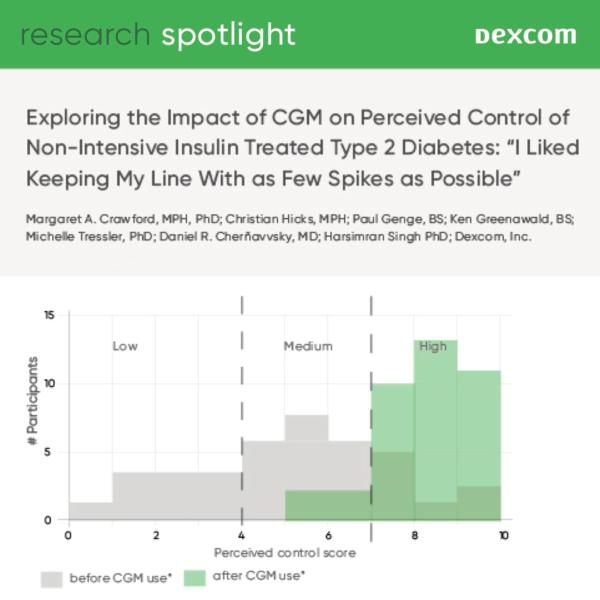
No, we did not. So diabetes, again, distress was decreased. The satisfaction with the technology, most of these being fairly new to CGM, was very high, and again, wanted to continue. So the quality of life of those patients were statistically significant across the board in improvement.
Yeah. And so before we get into the results of the CONNECT Trial, I just want to talk a little bit about, so what does this mean, either for Dexcom or the clinicians or the patients? Is this expanding coverage or expanding the ability for the patient who would not have been on a CGM be able to be on it now? What does it mean for the category?
Yeah. Lovely question. And I think as we all are looking as educators and clinicians in diabetes, we want patients to have access to the best technology. So because this was a randomized controlled trial, it ameliorates some of the challenges around correlation, like how much does CGM really impact? And it is that highest level of evidence that really gets the payer attention. And all the other global payer communities that are looking at socialized medicine globally or here in the United States, whether you're Medicare, Medicaid, and/or commercial insurance. So what this kind of study means is that we are looking at the identified clinical outcomes for the patient, type 2 non-insulin, across all demographics. Something really important is that even though we had a very large percentage of white Caucasian within this population, we did have some ethnic diversity. We also had age diversity.
We had socioeconomic diversity, education diversity. So it was not a homogeneous population, which is really important because, again, to your listeners, Cher, is that this is a highly generalizable study. It is not a cohort that is very, very specific.
So what that then allows is that these outcomes are applied to so many different types of our patients with type 2 diabetes across age, education, income level, commercial insurance, Medicare, Medicaid, et cetera. And what we're really doing at Dexcom is now to take this information to our payer community and have them see this is going to be not only a value add, but we're all trying to get better outcomes for our patient. The US national standard or average of A1c, as you well know, is still well in the eights. We're not getting there as a team, as a group. So let's add CGM.
We know it's going to improve our outcomes, and we'll show you the value over time. I think that's amazing and just so important. So I want to definitely talk about the results for the trial. So let's go on to that, and then let's talk about the results in terms of some of the medications that the people were on and what did we see there when they used CGM with the medication. So first up, what were the results?
What did we see for a change in A1c? So I think when we talked to all of our primary and center sites, we all didn't know what the study would actually show. It was somewhat of a risk. We didn't know if continuous glucose monitoring really would have a clinically significant or statistically significant impact. And I would say when you speak to Dr. Roy Beck and our primary investigator, Tamara Oser, they were all shocked. So the primary outcome was A1c. And in the treatment group, we saw a 1.6% reduction in hemoglobin A1c. Now, what's interesting, and you and I both know this as clinicians, we take care of patients. When you give them education, when you give them attention, there's a study effect. So they were in a study in the control group.
They got education that they may or may not have had prior to the study, so they also had a reduction in A1c. I think, again, that study effect of attention within type 2 diabetes. Would you agree? Agree, yeah, and I think it's important that we show what we saw. Yes, exactly.
Yeah. But within the treatment group, the difference between CGM and non-CGM was 0.9%. So it's just really, and we know that clinically impactful A1c reduction is 0.5%, and we were at that 1.6. Okay, and what else did we see? Increased time in range. Yes, of course. So the baseline time in range was in about 30%. Okay, so it was not very high at all. And then when we saw after the study, they were at 62% time in range. And what we know, every 5% is clinically meaningful. So again, statistically significant. Our patients in this study saw five hours more time in range between 70 and 180.
This is so important. And do we know, so sometimes I think it's been talked about maybe a person with type 2 diabetes not at goal, there might've been a connotation that they weren't engaged with their care, or maybe they weren't a candidate kind of to CGM.... right? So can we talk about that? I think that these kind of results show that that might not be true. Well, I'm going to go back to the point where the heterogeneity of this cohort of the study was wide. All education, all income levels, all ethnic levels, all ages. The average age was around 60 years old, right?
So people with type 2 diabetes were getting older as a population, not younger, right? And so the outcome of the study is really showing that for those that may think CGM is only for the educated or only for those that maybe have a higher socioeconomic status, is profoundly being- I think that's important for us to talk about. Yes. And make sure, and as a company, we really want CGM for all. Yes, absolutely. If you have diabetes, and actually what we're looking for is pre-diabetes and even health and wellness, but let's just focus on diabetes. If you are diagnosed with diabetes, regardless now from randomized controlled trials, we are seeing clinical and statistical improvement in all the things that matter for long-term comorbidity reduction, as well as overall control at six months, and we look forward to seeing it at 52 weeks.
Yeah, and there was another study here when we talked about the cardiovascular outcomes, too. Yeah. So, what we're looking at is through correlational studies. We have part of the medical affairs team and the health economics and outcomes research team are looking at large data sets like Truveta and Optum. And we're seeing the signal that if people are on CGM, there is longitudinal improvement in their atherosclerotic risk factors, kidney disease progression, and we had a wonderful study. It was a small randomized controlled trial by Dr. Ian Neiland in University Hospitals in Ohio, and he also was looking at the cardiology perspective.
Type 2, non-insulin patients benefiting from using CGM with a key endpoint, their atherosclerotic risk was reduced. I think that's so important in connection with this, no pun intended. So are there any other outcomes, clinical outcomes that we saw from this trial that we didn't get to? Is there anything else that we want to add on? You and I can talk about this probably for hours, but again, to really highlight, I think the other, again, secondary outcomes were important or exploratory outcomes. So, your type 2 population do not come in with a tight A1c cohort, as you well know, right? So what we saw is the full spectrum of A1c from less than six all the way to greater than 10. Those with a high A1c greater than 10%, they had a 3.1% reduction in hemoglobin A1c.
Amazing. And again, that was in six months, so really good to see. And, so the in-treatment group difference, those using CGM and not using CGM, was a 2.1% difference in A1c. Again, let's be transparent and realize that the control group did have improvement in the A1c cohort, but again, 2.1% difference.
What did we see in terms of results with the medications? With the SGLT2, with GLP-1, what were the outcomes there? You know, really fascinating. So as we know, we go into the algorithmic standards of care through ADA. We start off with behavior modification, then we go to metformin, then we add a GLP-1, then we do a SGLT2, and that's kind of the treatment algorithm. So we looked at people that were using just CGM, no medications. We looked at using just metformin, we looked at using just GLP-1s, just SGLT2s, and then the combination thereof, of GLP-1s and SGLT2s. So this is the fun part.
So with CGM alone, we again saw a 2.4% reduction in A1c just using CGM, no diabetes-lowering medications. When you look at all the other medications in combination or solo, you are looking at a range of 1.4 to 1.8% reduction. So one of the things, Cher, I really want to be very clear about is Dexcom is not saying that we should be replacing any of these medications. There's cardiovascular, there's kidney protective effects. Of course, we need to optimize their glucose control. But there was a very strong additive effect of all the improvements when using CGM.
Yeah, I think that's important to note. We just want the tools to be out there and for the best thing that's going to help. Also help the clinician and the patient, of course. And patient choice. Yep. Do we know when these results would come out? Yes. So they were presented at the ADA. So they were presented at oral scientific session yesterday, as well as patient-reported outcomes. And we are working actively with our investigators and our researchers to move forward and have this published in a tier one journal. And the extended phase is currently going on.
Yes. So as soon as the 26 weeks close up, we continue to 52 weeks, and so that will be something that we look forward to sometime early next year for those outcomes. Great. And so do you think that the results of this would change some clinicians' thinking in practice?
Do we think it would maybe or hopefully start to change the way that CGM could be helping more people and open the minds of clinicians in practice? I certainly hope so, as you do, too. I think there is, again, some clinical inertia out there that-- And I get it. Primary care is very hard to add one more thing in, but the quality of care, the quality of life for the patient is well worth it, and these studies show that. So the other thing I think is really interesting, too, is we don't really have standards for finger sticks. We have type 2 non-insulin-taking diabetes.
Even the ADA says, "Okay, well, maybe a couple finger sticks here and there," but it's not a standard guideline. What we saw in the study is both groups came in with about two to three finger sticks per week. The real-time CGM group went from those two to three per week to zero because they're getting real-time CGM. But the control group continued with those same finger sticks. So I think that value of, yes, they need information, but let's give them context in that information. Again, I'm going to go back to where you and I are always sitting in behavior modification. Type 2 diabetes is a behavioral change entity.
It is a self-managed disease. You need medications, granted, but what you decide in your lifestyle every day affects your glucose. So let's give them the opportunity to have the best information to make those lifestyle choices the best they can be.
Is there anything you want to leave our listeners with today, Keri, that we didn't cover? Any one last thought you want to share with them? I think we're in a really amazing time for diabetes care. No one, of course, wants diabetes, but if we were to have diabetes, we have the best drugs, we've got the best technology, and we now see the outcomes. I think our challenge is to prove to the payer community and those that are looking at the dollar of healthcare that CGM is your standard of care. We're going to drive that, I think, for the non-insulin taking patients with type 2 diabetes. But I will say CGM was very surprising in the amount of time these patients, not intermittently, but continuously wore CGM by choice, and that the behavioral change came. So, I am never worried that CGM is going to take away the importance of a certified diabetes care and education specialist.
I think it's going to enhance the way we can help our patients make the most informed decisions in their lifestyle. Yeah, and I think it can help the patients, but it also can help the patient relationship with the clinician because there's more information, and it can help guide some conversations that might not have, they wouldn't have been visible before. It's coming from the patient.
Yeah. So much better when the patient says, "I'm really struggling with my fasting glucose. What's going on?" Or, "I'm really struggling with my dinner. It's always high." Isn't that a great starting point when they're coming to you with a concern? Yeah, I love it. Keri, thank you so much for joining us today. It is my pleasure. I cannot wait for these results to come out and for us to just continue in general advancing the category of CGM and doing more studies, helping patients, helping clinicians. We will continue this, and thank you so much for the invitation.
Thanks for tuning in to another episode of the "GlucoseTech" podcast. For more learning resources, head to glucosetech.com, and we'll see you next time.

Some guests are paid spokespersons for Dexcom. Fingersticks required for diabetes treatment decisions if symptoms or expectations do not match readings. Dexcom G7 can complete warmup within 30 minutes, whereas other CGM brands require up to an hour or longer. Smart devices are sold separately. For a list of compatible smart devices, visit: dexcom.com/compatibility. “Dexcom" refers to the Dexcom CGM. Compatible smartphone is required to pair a new Dexcom G7 sensor with a compatible Apple Watch. To use Share/Follow the smartphone must be within 33 feet of the Dexcom G7. The Dexcom G7 Continuous Glucose Monitoring System (Dexcom G7 System) is a real time, continuous glucose monitoring device indicated for the management of diabetes in persons aged 2 years and older. Dexcom G7 has no limitations for use in pregnancy. G7 15 Day is only for adults 18+.
Brief Safety Statement: Failure to use the Dexcom Continuous Glucose Monitoring System and its components according to the instructions for use provided with your device and available at https://www.dexcom.com/safety-information and to properly consider all indications, contraindications, warnings, precautions, and cautions in those instructions for use may result in you missing a severe hypoglycemia (low blood glucose) or hyperglycemia (high blood glucose) occurrence and/or making a treatment decision that may result in injury. If your glucose alerts and readings from the Dexcom CGM do not match symptoms, use a blood glucose meter to make diabetes treatment decisions. Seek medical advice and attention when appropriate, including for any medical emergency.
Dexcom, Dexcom Follow, Dexcom Clarity, and Dexcom Share are registered trademarks of Dexcom, Inc. in the U.S., and may be registered in other countries.
STELO IMPORTANT INFORMATION: Consult your healthcare provider before making any medication adjustments based on your sensor readings and do not take any other medical action based on your sensor readings without consulting your healthcare provider. Do not use if you have problematic hypoglycemia. Failure to use Stelo and its components according to the instructions for use provided and to properly consider all indications, contraindications, warnings, and cautions in those instructions for use may result in you missing a severe hypoglycemia (low blood glucose) or hyperglycemia (high blood glucose) occurrence. If your sensor readings are not consistent with your symptoms, a blood glucose meter may be an option as needed and consult your healthcare provider. Seek medical advice and attention when appropriate, including before making any medication adjustments and/or for any medical emergency. Patient results may vary.