Image
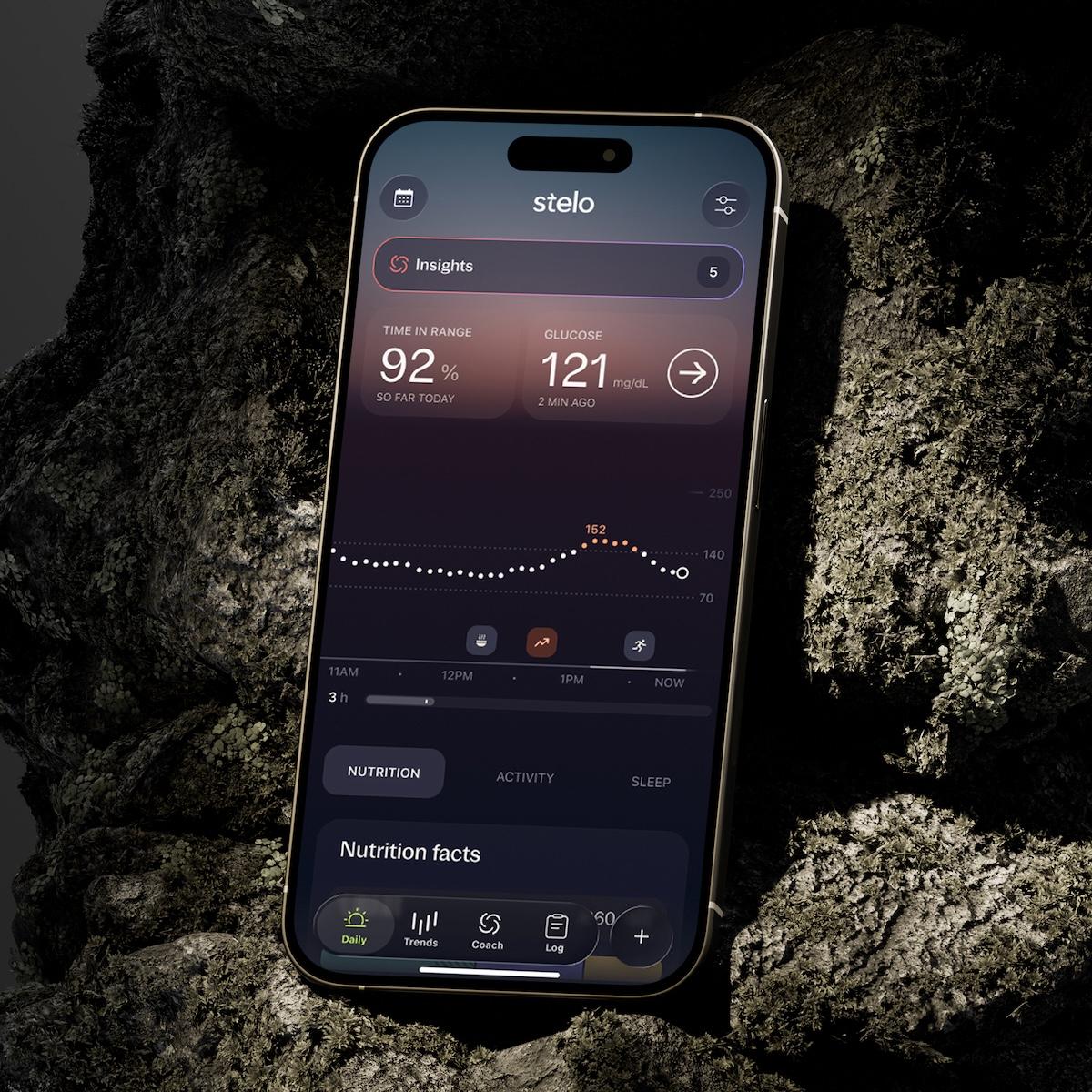
What HCPs should know about the updated Stelo app experience, including new features and patient education considerations.
This resource is intended for educational purposes only for healthcare providers practicing in the United States. It does not constitute medical advice and is not a substitute for professional judgment or individualized patient care.
The updated Stelo app experience is designed to help users better understand how everyday factors—including food, physical activity, sleep, and stress—may influence glucose patterns. Features such as Coach, enhanced meal logging, Trends, and Glucose Response Score are designed to help users examine patterns in their glucose data and consider how everyday behaviors may relate to their individual glucose responses.1 For healthcare providers, these features may provide additional context for patient education and discussions about glucose patterns, nutrition, activity, and other health behaviors.
The updated Stelo experience is designed to help users move beyond viewing glucose values in isolation. Coach, enhanced meal logging, Trends, and Glucose Response Score place glucose information alongside meals and other lifestyle context, helping users examine recurring patterns and potential relationships in their data.1
This contextual approach is relevant because postprandial glucose responses are not uniform across individuals. CGM-based studies have demonstrated substantial interindividual variability in glucose responses, including different responses among people consuming identical or standardized meals.3,4 These findings support interpreting meal-related glucose patterns in individual context rather than assuming that the same food or behavior will produce an equivalent response in every person.3,4
By organizing glucose information alongside meal and lifestyle context, the updated Stelo experience is intended to support exploration of individual glucose patterns.1 These observations may also provide a starting point for educational conversations between users and healthcare providers. This potential clinical application should be understood as a proposed use of the features, not as evidence that the app independently produces behavior change or improves clinical outcomes.

The Coach feature helps turn glucose data into meaningful, easy‑to‑understand guidance. Smart device sold separately.*
The updated Stelo experience introduces several features designed to add context to glucose data. Each feature provides a different way for users to review patterns, examine relationships, and consider questions that may be relevant to future discussions with a healthcare provider.
Coach is an AI-powered educational tool that provides explanations and insights related to how nutrition, activity, stress, and sleep may relate to glucose patterns.1†
The feature may help users formulate questions and recognize patterns that warrant additional consideration. However, AI-generated observations should not be treated as diagnoses, treatment recommendations, or substitutes for individualized clinical assessment.
Enhanced meal logging allows users to capture meals in multiple ways, including photo-based logging, barcode scanning, and food search within the app. Once a meal is recorded, users can view nutrition information such as carbohydrates, fiber, protein, and fat alongside their glucose data, creating a more comprehensive view of daily food intake and glucose measurements.1
The feature also incorporates meal-related insights and Glucose Response Scores, helping organize meal and glucose information within a single experience.1.
Glucose Response Score provides a simplified representation of the glucose response following a logged meal. The feature considers elements of the postprandial response and presents the result in a format intended to be easier for users to interpret.1
The score should be used as an educational and pattern-recognition tool rather than as a judgment about whether a food is inherently “good” or “bad.” It represents the user’s glucose response under a particular set of circumstances and should not be interpreted as a comprehensive assessment of nutritional quality or overall health.
Trends presents glucose and logged lifestyle information over time, helping users examine recurring relationships across their data.1 Reviewing information longitudinally may help users move beyond isolated glucose values and consider whether patterns recur under similar circumstances.
Healthcare providers may find this longitudinal context useful when helping patients distinguish recurring patterns from individual or atypical observations. This is a proposed educational application of the feature and should not be presented as a demonstrated improvement in clinical outcomes.
Collectively, these features are designed to add contextual interpretation to glucose information rather than presenting glucose values in isolation.1
The clinical significance of these innovations extends beyond glucose visibility.
Research has demonstrated that CGM can increase awareness of the relationship between behaviors and glucose responses, supporting improvements in dietary choices, physical activity, and overall self‑management.3,4. However, data alone may not be sufficient. Many users need context to understand what glucose patterns mean and how they relate to everyday decisions.
The new Stelo experience attempts to bridge this gap by:

For example, a user may notice that a late‑night meal consistently produces a higher Glucose Response Score, or that morning walks correspond with more stable glucose patterns. These observations can serve as starting points for collaborative discussions about behavior change.
Stelo may be appropriate for:
Healthcare professionals may want to emphasize:
Helping users approach glucose data with curiosity rather than perfection may be one of the most important educational opportunities associated with these new features.
The relevance of the updated Stelo experience may be less about any single feature and more about how the features work together. The combination of continuous glucose sensing, meal capture, longitudinal pattern recognition, and educational insights has the potential to change passive glucose monitoring into an active learning experience.
Healthcare providers can view Stelo features as:
Healthcare providers should nevertheless maintain a distinction between observation and inference. A recurring association between a behavior and a glucose pattern may justify further exploration, but it does not necessarily establish that the behavior caused the response. Clinical interpretation should account for the individual’s health status, medications, symptoms, goals, and the limitations of the available data.
In many ways, the future of CGM may be less about generating more data and more about making data easier to understand and act upon.

*Smart device sold separately. For Stelo app compatibility information, visit stelo.com/compatibility.
†Tips from the AI Coach are not medical advice.