Image

Explore evidence on the evolving role of CGM in clinical practice and implications for healthcare providers.
This resource is intended for educational purposes only for healthcare providers practicing in the United States. It does not constitute medical advice and is not a substitute for professional judgment or individualized patient care.
This monthly Research Recap reviews a selection of recent and relevant CGM studies chosen for this month’s theme, highlighting the expanding role of continuous glucose monitoring (CGM) beyond insulin‑treated diabetes. Recent studies examined CGM use in adults with type 2 diabetes not using insulin, CGM-guided behavioral interventions, implementation during transitions of care following hospital discharge, and the association between sustained CGM use and glycemic outcomes in real-world practice.
A growing body of evidence reflects a broader shift in how CGM is being evaluated and integrated into diabetes care. Rather than serving solely as a monitoring technology, CGM is increasingly studied as a tool that may help patients understand the impact of daily behaviors, support more informed clinical conversations, and provide actionable data across diverse care environments.

Continuous glucose monitoring may support greater engagement with personalized glucose insights.
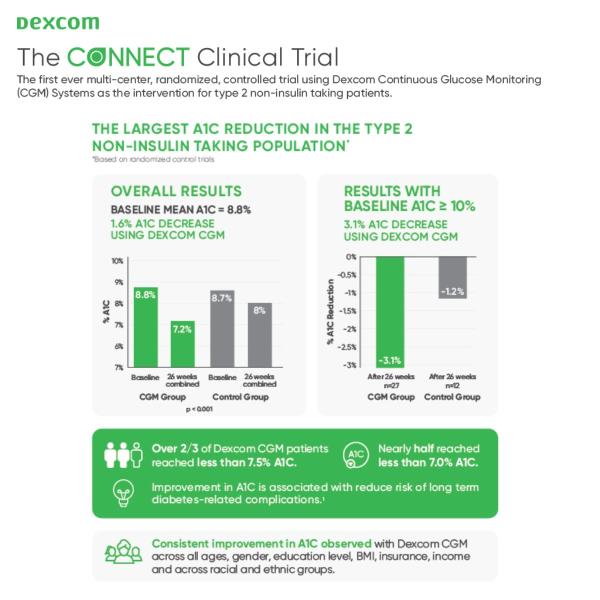
A Randomized Controlled Trial Using Continuous Glucose Monitoring to Guide Food Choices and Diabetes Self-Care in People with Type 2 Diabetes not Taking Insulin
Multicenter randomized controlled trial
Researchers evaluated whether CGM could help adults with type 2 diabetes not using insulin improve glycemic outcomes through greater awareness of food choices and lifestyle behaviors. Participants were randomized to CGM alone or CGM combined with a food-logging application and followed for six months.
CGM may serve as more than a monitoring device, helping patients connect food choices with glucose patterns and supporting self‑management in adults with type 2 diabetes not using insulin.
Exploring Combined Use of Continuous Glucose Monitoring and Anti-Diabetes Medications on Glycaemic Control for People With Type 2 Diabetes Not Using Insulin
Retrospective observational analysis (administrative claims and linked laboratory data)
This real‑world analysis evaluated whether CGM use in adults with type 2 diabetes not using insulin was associated with different glycemic outcomes when used alongside commonly prescribed anti‑diabetes medications. More than 52,000 adults were included in the analysis.
As clinicians increasingly manage patients using multiple therapies, understanding how CGM may complement existing treatment approaches is becoming more important. This study contributes to real‑world evidence exploring how CGM may fit into broader diabetes management strategies.

Evidence continues to build around CGM use in adults with type 2 diabetes not using insulin.
Effect of Continuous Glucose Monitoring Following Hospital Discharge of Patients With Type 2 Diabetes
Prospective, non‑randomized clinical study
Investigators evaluated the feasibility and clinical impact of initiating CGM at hospital discharge among adults with type 2 diabetes. The study examined glycemic outcomes, CGM utilization, remote monitoring, and healthcare utilization during the transition from inpatient to outpatient care.
Hospital discharge represents a vulnerable period for people with diabetes. These findings contribute to a growing evidence base supporting the potential role of CGM in care transitions and ongoing diabetes management following hospitalization.
Continuous Glucose Monitoring Frequency and Glycemic Control in People With Type 2 Diabetes
Retrospective, propensity score‑matched, cross‑sectional study
Investigators evaluated the association between CGM use frequency and glycemic control over 12 months among adults with type 2 diabetes. The analysis used claims and electronic medical record data collected from 2019 through 2023. Adults aged 18 years or older with baseline HbA1c values between 7.0% and 15.0% were included. Participants were stratified according to CGM use frequency ranging from 1–90 days of sensor use up to more than 270 days of sensor use over a 12‑month period and were compared with a propensity score‑matched cohort that did not use CGM.
This study suggests that more frequent and sustained CGM use is associated with greater improvements in glycemic control among adults with type 2 diabetes. The authors identified approximately 6 months after CGM initiation as a key time point for clinicians to assess ongoing use, address potential barriers to continued utilization, and reinforce strategies that support long‑term engagement.